Medicare is a health insurance program for individuals who meet one of the following criteria:
Understanding when and how to enroll is important, as late enrollment can result in permanent penalties.
Medicare charges a lifetime late enrollment penalty of 10% for each 12-month period you were eligible for Medicare Part B but did not enroll. This penalty does not apply if you are covered by an employer health plan. See Working Past Age 65 below.
If you are receiving Social Security benefits:
If you are NOT yet receiving Social Security benefits:
Medicare Part A
Medicare Part B
If you or your spouse are covered by an employer health plan, you may delay enrolling in Medicare Parts A and B.
When employer coverage ends, you have a one-time Special Enrollment Period of up to eight months to enroll in Medicare without penalty. Contact your local Social Security office to schedule an appointment or enroll online at www.ssa.gov/medicare/sign-up.
If you already have Medicare Part A:
You must enroll in Medicare Part B and submit the following to Social Security:
This form confirms you delayed Part B enrollment due to employer coverage and prevents a late enrollment penalty.
If you have Part A only or receive a Social Security benefit, you generally cannot file your Medicare application any earlier than 30 days before the month you want your coverage to begin.
Contact your local Social Security office for these forms or download them at www.ssa.gov/forms.
If you do not have Medicare:
You must enroll in both Medicare Part A and Part B and submit:
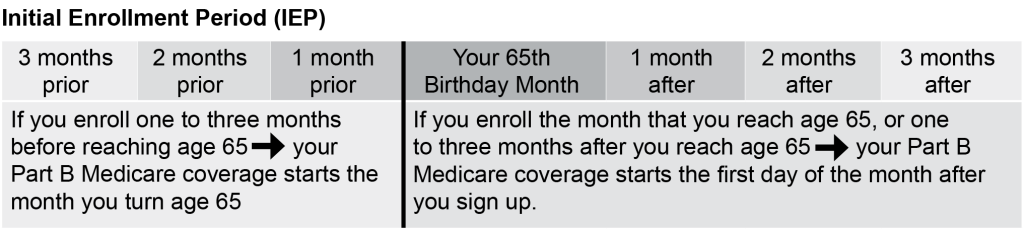
If you are not yet receiving Social Security benefits, you may apply up to three months before coverage begins.
Forms are available at ssa.gov/forms or through your local Social Security office.
Helps cover:
Part A is premium-free for most people, based upon either their own work history or their spouse’s work history in Social Security.
Helps cover:
Everyone is eligible for Part B and pays a monthly Part B premium. In 2026, the premium for most new enrollees is $202.90 per month.
Purchased separately, unless you enroll in a Medicare Advantage plan that includes Part D.
When you become eligible for Medicare, you must choose how to receive coverage:
Members eligible for SERS’ health care coverage will receive an “Approaching 65” packet approximately three months before turning 65. This packet includes information about Medicare enrollment and the SERS Medicare Advantage Plan.
Enrollment opportunities are limited. If you decline SERS’ Medicare coverage or enroll in another individual Medicare plan, future enrollment may not be allowed.
Eligible SERS retirees enrolled in both Medicare Part B and SERS’ health care coverage may receive a $45.50 monthly reimbursement toward their Part B premium.
You are not eligible if:
Reimbursement begins after proof of Part B enrollment is received and is not retroactive. Spouses and dependents are not eligible for this reimbursement.
We’re glad you’re a member of SERS. If you have questions about your retirement account or benefits, we are here to help.